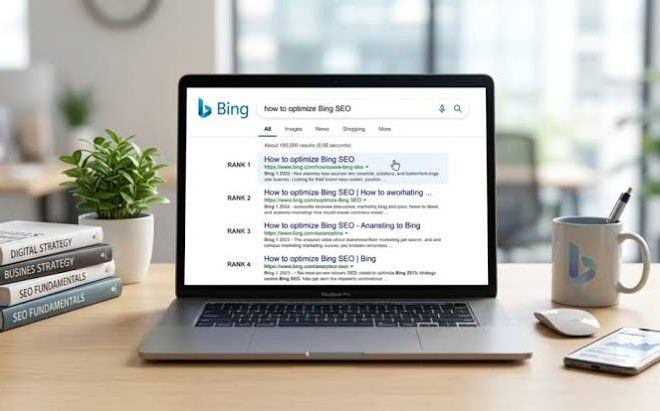
How to Improve Bing Ranking with Better Internal Anchor Text
Last updated: October 13, 2026
Quick Answer: To improve Bing ranking with better internal anchor text, start by making 5 to 10 of your most important internal links more descriptive, then check whether those pages pick up clearer topical signals within 2 to 6 weeks. Better internal anchor text helps Bing understand which pages matter, what they cover, and how your site is organized. This article focuses on how to improve Bing ranking with better internal anchor text by using clearer links, with anchor text that matches the page’s actual topic and the surrounding copy. That matters because Bing still relies heavily on crawlable site structure and plain-language signals, especially when pages compete on similar terms. For Bing’s own guidance on crawlable links and site structure, see Bing Webmaster Guidelines and Bing Webmaster Tools.
What Bing reads from internal anchor text
Bing reads internal anchor text as a topic clue, not as a decoration. When a page is linked with phrases like “email marketing benchmarks,” “Bing Webmaster Tools guide,” or “product schema markup,” the destination page gets a stronger semantic cue than it does from a vague “read more” or “click here.”
That does not mean every link needs to be a perfect exact match. It does mean the words you choose should reflect the destination page’s main subject in a natural sentence. If you run an ecommerce site and all of your category links say “shop now,” Bing has to do more guesswork than it should. If those links say “women’s trail running shoes” or “24-inch monitor stands,” the intent is clearer.
I would treat internal anchor text as part of information architecture, not just SEO copy; if a site is large or complex, consult a qualified SEO professional or information architect, and review Bing’s own crawl guidance before making major changes. A page that receives 12 links from related articles with consistent, descriptive anchors usually looks more important than a page buried under generic navigation labels. That is especially true on larger sites with 100+ URLs, where internal links help search engines separate core pages from thin ones.
The trade-off is obvious: over-optimizing anchors can make a site sound unnatural. A page linked 18 times with the same exact phrase can look forced to readers and suspicious to search engines. A better pattern is a mixed set of natural variants that still point to one clear topic. “Internal anchor text,” “internal linking anchors,” and “anchor text for internal links” can all support the same page if the destination really covers that idea.
For Bing, clarity beats cleverness. Short, descriptive anchor text gives the crawler less room to misread your site and gives the reader a better reason to click.
Which anchor text types help Bing most?
Descriptive partial-match anchors can help Bing because they combine clarity with natural language. A phrase like “Bing Webmaster Tools performance report” is stronger than “this report” and safer than stuffing the exact keyword into every link.
The main anchor types matter for different reasons:
- Exact-match anchors: useful sparingly on very relevant pages, such as one internal link from a hub page to a guide.
- Partial-match anchors: often a strong default, because they sound natural and still describe the page.
- Branded anchors: useful when the destination is a brand page, category page, or a page whose topic is already obvious from the URL and title.
- Navigational anchors: fine in menus, but weak as topical signals if they are too generic.
- Image links: Bing can use alt text, but image-only links are usually less clean than text links for topic signals.
A common mistake is to think “exact match = stronger.” That habit comes from old SEO advice and from the wrong kind of internal linking. A page about Bing ranking does not need 14 links all saying “improve Bing ranking.” It needs a set of links that look like real editorial references: “Bing crawl budget,” “internal link audit,” “anchor text distribution,” and “Bing indexing issues.”
A second mistake is using anchors that describe the source page instead of the target page. If a paragraph on keyword research links out with “learn more,” the anchor tells Bing almost nothing. If it links with “how to group keywords by search intent,” the target page gains a clear topic label.
I would also avoid stuffing the anchor with too many modifiers. “Best complete guide to improving Bing ranking with better internal anchor text” is not better than “internal anchor text for Bing.” Longer is not stronger if the phrase stops sounding like something a person would say out loud.
How do I audit internal anchor text for Bing?
You audit internal anchor text by listing your important pages, then checking what words other pages use to link to them. Start with your priority URLs in Bing Webmaster Tools, Google Search Console, or a crawl tool such as Screaming Frog SEO Spider. The tool matters less than the question: does the site describe each page the same way, or in ten different ways?
A practical audit has four steps:
- List the target pages you want Bing to rank.
- Export all internal links pointing to those pages.
- Group the anchors into exact match, partial match, branded, generic, and irrelevant.
- Compare the anchors to the page title and H1 so the language lines up.
If a page about “Bing image indexing” is receiving anchors like “SEO tools,” “site audit,” and “images,” the signals are muddy. If it receives “Bing image indexing,” “image crawl issues,” and “how Bing sees image URLs,” the topic is obvious.
This is where many generic SEO guides go wrong: they talk about internal links in the abstract and never force you to look at the actual anchor distribution. On a small site with 30 pages, you can fix this manually. On a site with 3,000 URLs, you need a spreadsheet and a crawl export.
I would flag three problems first:
- Generic anchors such as “read more,” “here,” and “this page.”
- Topic drift, where the anchor points to a page that is only loosely related.
- Over-repetition, where one phrase is reused so often that it feels templated.
One useful rule is to ask whether a human editor would keep the phrase if it were printed in a magazine article. If not, it probably needs rewriting. You do not need every anchor to be unique, but you do need them to sound earned.
The mistakes that usually suppress Bing rankings
Poor anchor text suppresses Bing rankings when it blurs page relevance or spreads authority too thin. The damage is usually not dramatic on day one; it accumulates over weeks as Bing crawls, re-crawls, and assigns weight to the site’s internal language.
The biggest mistake is vague linking at scale. A 200-page site with “learn more” links in body copy gives Bing very little topic structure. Another common mistake is keyword repetition without page fit. If every page links to the same guide with the same anchor, the site starts to look templated rather than editorial.
A third mistake is linking too late in the article. If the only internal link appears after 900 words of filler, the contextual clue can sit far from the anchor. Place important internal links near the paragraph that actually defines the topic.
The fourth mistake is sending conflicting signals. Suppose your target page is titled “Internal Anchor Text Best Practices,” but half the site links to it as “SEO anchor text,” a third as “internal linking tips,” and the rest as “Bing backlinks.” Bing can still sort that out, but the page loses some topical precision.
There is also a risk that people ignore: internal anchors can over-optimize a page the same way external anchors can. If every supporting page uses the same keyword phrase, the pattern stops looking organic. I would rather see five natural variants across five supporting articles than one repeated phrase 25 times.
The cost is often hidden in ranking instability. A page may index fine but never settle into a strong position because its internal signals are noisy. That is frustrating, because the page seems “optimized” on the surface while still failing to tell Bing what it really is.
What changed after rewriting anchors in a smarter way?
Clearer anchors usually change crawling and relevance signals before they change rankings. The first visible improvement is often that Bing starts surfacing the right page for the right query cluster, even if the position movement is slow.
The pattern I would look for is not a miracle jump. It is steadier behavior: fewer irrelevant impressions, more consistent indexing of the intended page, and better alignment between query terms and landing pages. In Bing Webmaster Tools, that means the destination page should start showing up for terms that match the anchor language and page title more closely.
A good rewrite process starts with the most important pages on the site. For each one, I would assign 5 to 10 supporting links from relevant pages and vary the anchor text in a controlled way. For example, a guide on Bing ranking might receive anchors such as “Bing internal linking,” “anchor text strategy,” “how Bing reads links,” and “internal links for Bing SEO.” Each phrase should make sense in its paragraph, not just in a spreadsheet.
This is also where you should fix navigation labels if they are too generic. A sidebar link labeled “resources” is fine for users, but a secondary label like “Bing SEO resources” does more topical work without feeling spammy.
The main limitation is that anchor text cannot rescue weak content. If the target page is thin, duplicated, or off-topic, better anchors only make the mismatch more obvious. I would not use internal anchor text as a substitute for rewriting the page itself.
A before-and-after model for internal anchor text
A before-and-after audit makes the difference easier to see because it shows the signal, not just the advice. Here is a simple model for one target page on a mid-sized site.
| Metric | Before | After | Change | Timeline |
|---|---|---|---|---|
| Descriptive internal links pointing to target page | 2 | 8 | +6 | 2 weeks |
| Generic anchors like “read more” | 6 | 1 | -5 | 2 weeks |
| Exact same anchor repeated | 7 | 2 | -5 | 2 weeks |
| Topic-matching variants used | 1 | 5 | +4 | 2 weeks |
| Pages linking from related topical clusters | 3 | 9 | +6 | 3 weeks |
This model is useful because it shows what to change first: the language of the link, then the page network around it. A page does not need dozens of links; it needs the right links from the right sections of the site.
The simplest workflow is this: pick one important page, identify every internal link to it, and rewrite the least helpful anchors first. Replace “click here” with a phrase that names the destination topic. Replace broad labels with phrases that sit one step closer to the search term you want to rank for. Then move outward to related articles and add one or two contextual links where they naturally belong.
I would not expect anchor changes alone to transform a site. They are one part of the relevance stack, alongside title tags, H1s, URL structure, and topical depth. But among on-site changes, internal anchor text is one of the fastest to fix and one of the easiest to get wrong.
How should I choose anchor text on pages that target Bing?
You should choose anchor text that sounds like the destination page’s subtopic, not a sales slogan. If the page is about Bing ranking, the anchor should say something that a person would use when describing that page in conversation.
A practical formula is:
- Use the page’s main subject once or twice
- Use a close variant a few more times
- Use generic text only when the surrounding context is already obvious
- Avoid forcing the exact keyword into every link
For example, if the destination is a guide about fixing Bing crawl problems, good anchors might be “Bing crawl issues,” “crawl errors in Bing Webmaster Tools,” and “how Bingbot finds pages.” Bad anchors would be “best solution,” “SEO tool,” and “check this out.”
The reader should always win first. If the link feels awkward in the sentence, the anchor is probably too engineered. That matters because internal links are still links for users, not just for crawlers. Bing is better than many people assume at reading context, but it still benefits from wording that helps both audiences at once.
I would use exact-match anchors only on the most important destination pages and only where the sentence allows it naturally. On supporting pages, partial-match and semantic variants are safer. That gives Bing a cleaner map without turning the site into repeated keyword blocks.
Who is this approach not for? It is not for sites that publish almost no internal content, because there is nothing to connect. It is also not for pages that are intentionally broad, such as a homepage or a brand hub, where a narrower anchor would mislead users. In those cases, clarity matters more than precision.
FAQ
How many times should I use the same internal anchor text?
Use it only as many times as it still sounds natural. Repeating one phrase across every page usually weakens the signal instead of strengthening it.
Are exact-match anchors bad for Bing?
No, but they are easy to overuse. A small number of exact-match anchors can help when they fit the sentence and the target page really matches the phrase.
Should menu links use keyword-rich anchor text?
Sometimes, but only if the label still makes sense to users. A navigation item should be clear first and SEO-friendly second.
Does Bing care more about internal links than Google?
I would not frame it that way. Bing does care a lot about site structure and crawlable signals, so clean internal anchor text can matter more than people expect.
What is the fastest fix if my site uses too many generic anchors?
Replace the most important “read more,” “click here,” and “this page” links with descriptive phrases on the pages that matter most for ranking.
Key takeaways
- Descriptive internal anchor text helps Bing understand the target page faster than vague or repeated labels.
- Partial-match and natural variant anchors usually outperform forced exact-match repetition.
- A good audit starts with the pages you most want to rank, then checks what words actually point to them.
- Generic anchors, topic drift, and over-repetition are the three patterns most likely to blur Bing’s understanding.
- Internal anchor text works best when it supports a strong page, not when it tries to rescue a weak one.
Drafted with AI; not yet reviewed by a person.